
Earth Day is just around the corner 🌍 with spring cleaning in full gear, we wanted to share some practical, sustainable living and cleaning tips on how to show love to your home, community, plus the whole planet. Let’s get started!
The Origins of Earth Day
The idea for Earth Day was first created by Junior Senator, Gaylord Nelson of Wisconsin in 1969 after witnessing the devastating impacts of an oil spill in Santa Barbara, California.
With the help of Congressman Pete McCloskey, they recruited student activist Denis Hayes to help organize college campus sit-in’s to provide education and awareness that would eventually spread nationwide.
The first Earth Day, April 22nd, 1970, reached 10% of the population - 20 million Americans took to the streets to protest the impact of 150 years of industrialization and its effects on the environment.
Within the first year of the first Earth Day, the United States Environmental Protection Agency was founded. Since then different bills like the Clean Water Act, the Clean Air Act, and many others have gone into effect.
Today, Earth Day is celebrated by:
Tree planting🌱
Environmental education🧠
Climate advocacy
Community litter cleanups 🗑️
plus so much more!
There is also increasing awareness of the toxic chemicals found in everyday cleaning, cooking and beauty products, plus, how these products have negative impacts on us and our environment.
Turning to safer alternatives has become a main priority to the consumer base within the last 50 years. According to Consumer Goods Technology, “82% of shoppers prefer a brand to align with their values”.
This creates a wonderful opportunity to seek safer, more natural alternatives.
The Significance of “Cleaning Green” vs “Green-Washing”
Dee’s Green Cleaning firmly believes that everything we do makes an impact on the world around us. 💚
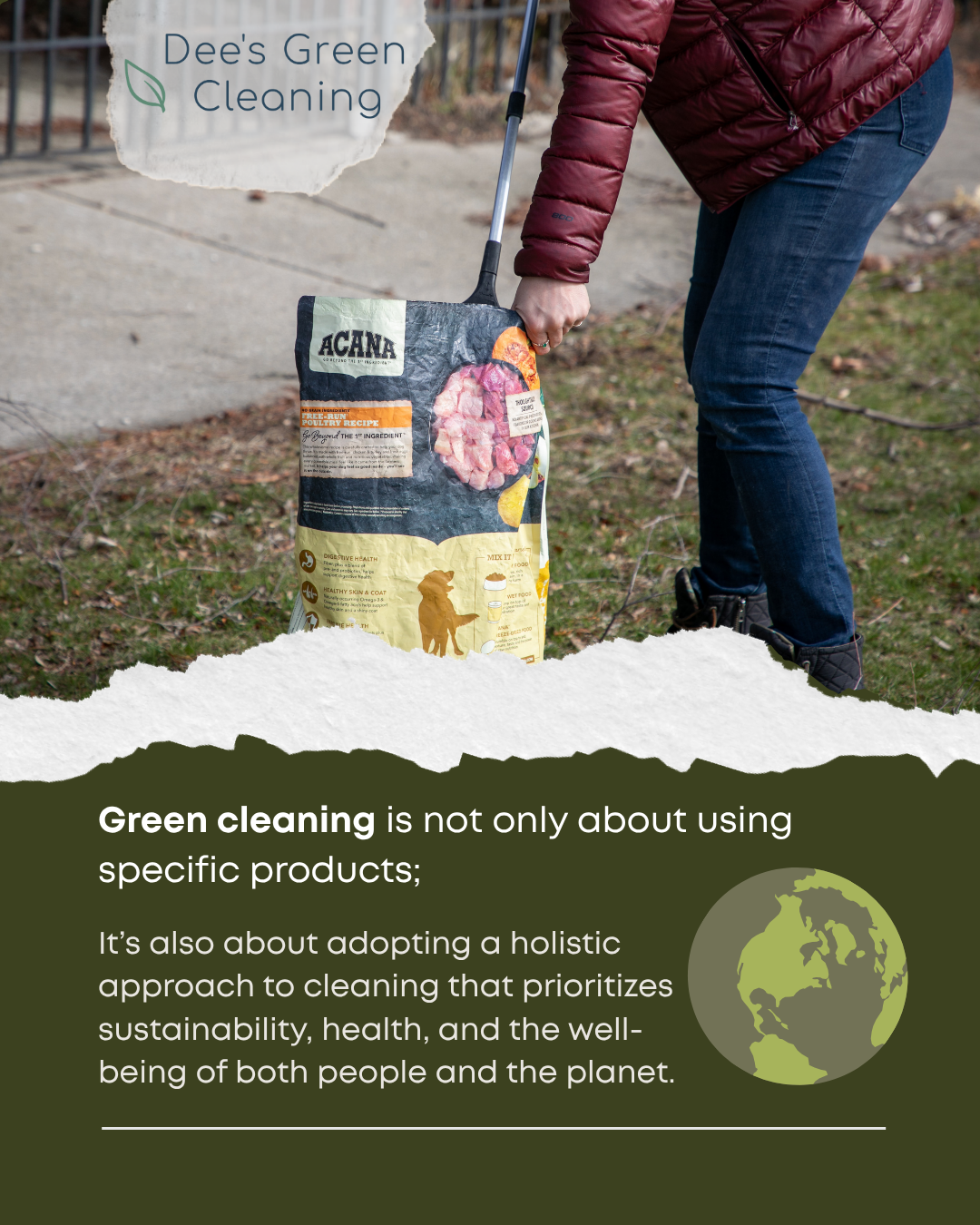
Cleaning Green is not just about Earth Day, it’s a way of life.✨
Cleaning “green” means being conscious of the ways in which we provide services, reduce waste, and use products that are safe for our home and environment.
Just because a product or service says it’s “green”, doesn’t mean it actually is.
The term “green-washing” refers to any company, campaign, or product that claims to be “natural”, “eco-friendly” or even beneficial, however, turns out not to be the case.
Popular examples of green-washing include:
Clothing made from recycled materials; usually this means that more plastic was used in the creation of clothing.
Packaging that poses as recyclable; however in reality, just a small portion of the packaging is, or not at all.
Products that claim to be free of harsh chemicals: this includes companies that make use of effective marketing techniques to play into our psychology, such as posting the breast cancer awareness ribbon on products that are known to disrupt our endocrine system and cause cancer.
Solutions against “green washing”:
Check the labels of clothing you are purchasing or thrifting; when available, choose fabrics like cotton, wool or linen.
Look for product packaging that is recyclable, or avoid packaging when possible.
Use reusable bags + steer clear of grocery bags & Styrofoam.
Check with your local recycle facility to ensure you’re disposing & recycling packaging the proper way.
Check the ingredients listed on products.
Remember, just because something says, “natural”, “all natural” or “healthy”, doesn’t automatically mean that the products are safe from synthetic fragrances, parabens, sulfates, and more.
To ensure the safety of your cleaning products and practices, turn toward trusted companies like Metro-Detroit based cleaning company, Dee’s Green Cleaning, who have taken the time, and have the expertise of nearly 13 years to help you make informed decisions.
Eco-Friendly Products
Are you curious about what sustainable cleaning steps you can make today? Look no further! We have a beginner’s guide to 4 easy swaps for your home ✨
Avoid Melamine Foam 🧽
The popular cleaning product, “Magic Eraser”, is made up of melamine foam, which is “made of poly (melamine-formaldehyde) polymer — a network of hard, plastic strands assembled into a soft, lightweight foam”.
As these sponges wear away from use, the foam breaks down into smaller pieces that once released into the environment, the fibers can be consumed by wildlife and make their way into the food chain.
The team at ACS’ Environmental Science & Technology determined that a single sponge releases approximately 6.5 million fibers per gram of worn-out sponge. Meaning, worldwide, melamine sponges could release over a trillion microplastic fibers every month. 😱
One thing you can do today is say, “goodbye” to Melamine sponges, as well as common sponges like Scrub Daddy.
Our simple swap is to use sponges made of coconut husk and cellulose (plant fiber).
Still effective at removing built up grime, however, as these sponges breakdown, you can take a deep breath knowing that the only things ending up back into our ecosystem are plant materials. 🌱
2. Ditch Harsh Chemicals & Synthetic Fragrances
What are synthetic fragrances? According to the Breast Cancer Prevention Partners, “synthetic fragrances are complex mixtures of various chemical compounds designed to mimic natural scents. However, unlike their natural counterparts, these compounds often include phalates, parabens, and synthetic musks, all of which can lead to serious health issues”.
Exposure to these compounds “can cause allergic reactions, endocrine disruption, and cancer-causing effects”. Additionally, synthetic fragrances can release VOCs, “which are gases emitted from certain solids or liquids, and can pollute the indoor air we breathe, contributing toward various health problems.” 🤢
When you choose essential oils over synthetic fragrance, you are choosing health for your family in more ways than one.
Research conducted by the National Library of Medicine suggests that rosemary essential oil has “antibacterial, antifungal and antioxidant properties”.
Rosemary essential oil as well as basil, have been proven as “active against all the clinical strains from Escherichia coli” (E-coli).
Our simple swap from harsh chemicals and fragrances is to check the ingredient label to avoid “natural fragrance”.
Instead, opt for products that designate, “fragrance from essential oils”, or have the oils listed.
You can also ditch products like Comet, (which contains bleach), to an actual safer alternative like Bon Ami.
When you’re in need to remove built up grime and hard water stains, this is our go-to.
Bon Ami is
✅ Free of harsh chemicals, dyes & fragrances
✅ Scratch-free & biodegradable
✅ Hypoallergenic, vegan & cruelty free
You can also rest assured, when you receive cleaning services from Dee’s Green Cleaning, we make our all purpose cleaner with the highest quality essential oils, free of synthetic musk & harsh chemicals 💚
3. Pitch Plastic Bristles
Another simple swap is to pitch plastic any way we can. As a green cleaning company we prefer brushes made with bamboo fibers and wooden handles. This helps reduce plastic shedding, thus, preventing plastic from entering into our sewer systems.
In addition, natural fibers like wood and bamboo are biodegradable, and will decompose at a much faster rate than plastic, which remains in a landfill for a lifetime.
4. Refillable Containers & Concentrates
What adds more to plastic pollution than buying the same plastic packaging over and over again?
Think about all the containers your products come in,
Bathroom
Beauty
Cleaning
Laundry
just to name a few!
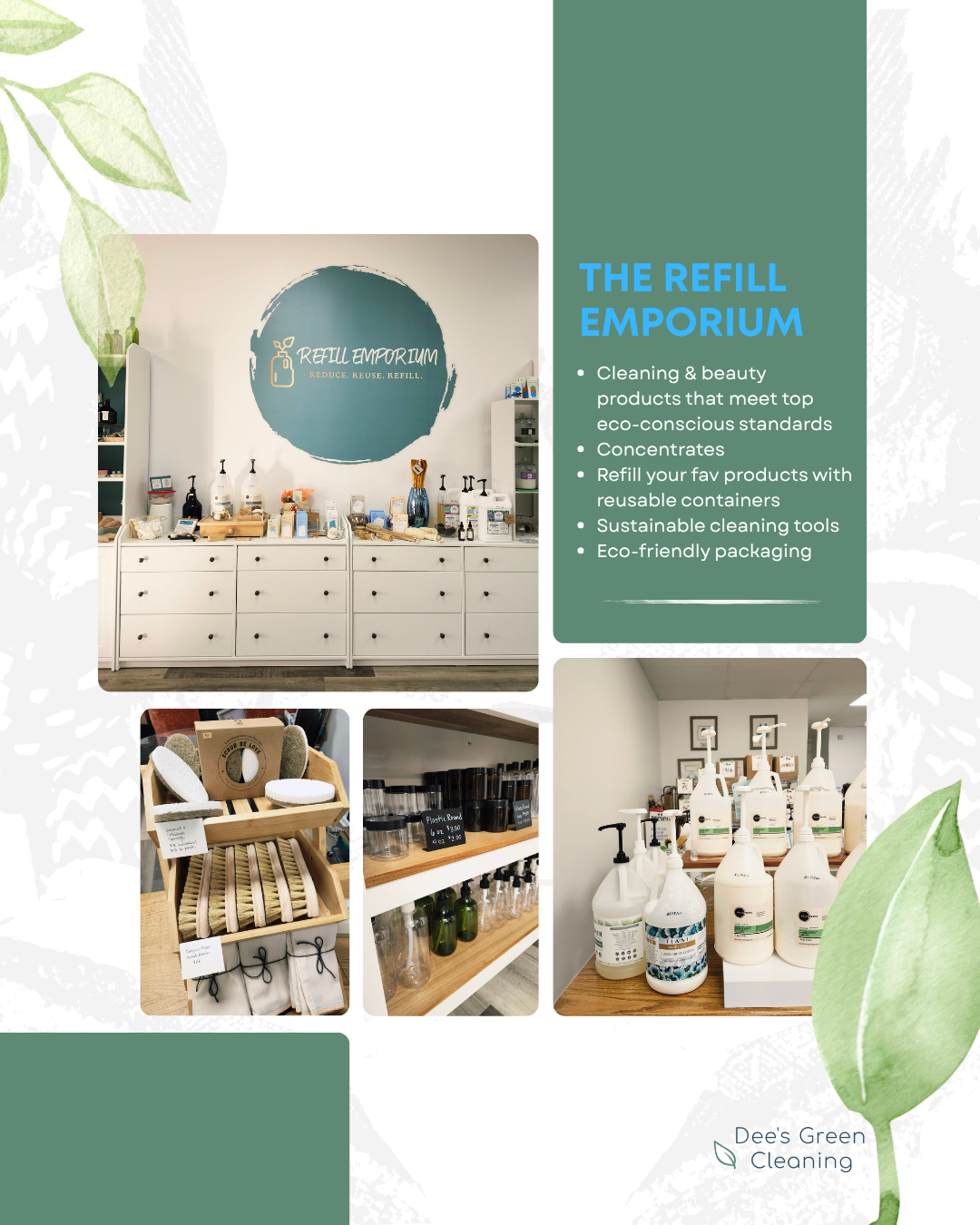
So many goodies!
One solution is to look for products that come in recyclable materials like cardboard, glass, or package-free. Glass containers are effective at storing products without microplastics leaching into your product.
You may also use plastic containers that you already have:
the key is to reuse, reduce, and recycle.
Metro-Detroit based company, The Refill Emporium, utilizes the ability to bring your own clean, empty containers to take home your favorite non-toxic products.
In addition, this company offers the use of concentrates to extend the life of your products!
Concentrates are amazing - they cut out the amount of water used, leaving you more product to determine the strength for your specific cleaning needs. Having a tough time cutting through stuck-on gunk? Add a little more of your cleaning concentrate to your water, and let the product do the work for you ✨
Additional Sustainable Tips
When taking on your spring cleaning checklist, we have a few other sustainable highlights to help conserve water, energy, and materials.
Buckets of water & washable towels
Instead of running water and paper towels,
Fill a bucket of water with your favorite all purpose cleaner.
Use multiple cotton towels
Once a towel has been thoroughly used, set off to the side and use a new one so as to not dirty your water so fast, + this also extends the life of your product.
Your towels get washed avoiding the need for single use items like paper towels.
Energy use
Being mindful of energy use is equally important as what products we use!
When not in use, turn off your vacuum instead of letting it sit & run as you arrange furniture.
Opt for a broom when applicable.
If you aren’t actively cleaning or residing in a space, turn off the lights to conserve energy 💡
Unplug cleaning (and other devices) when not in use - these appliances still draw energy, even when they aren’t turned on!
Air dry towels & clothing👕
Shop local to avoid unnecessary packaging + save on gas & environmental pollutants.
Reuse, reduce & recycle
Throughout this blog we have mentioned several ways in which you can extend the life of your cleaning products, how to reuse and reduce packaging, practical ways to save water, energy use, as well as simple cleaning swaps.
It can not be reiterated enough to reduce, reuse and recycle - according to the International Union for Conservation of Nature and Natural Resources, “460 million metric tons of plastic are produced every year for use in a wide variety of applications”.
Simple swaps and mindful practices help to reduce this amount. ♻️
It may seem like small steps, but we cannot underestimate the impact.
Your Voice Matters!🔊
Sometimes it may feel daunting to think about the amount of waste in the world, however, consumers prefer that their brand align with their personal values now more than ever before. This means that there is an ever-growing demand for better alternatives than the existing toxic products and methods available.
Using your voice through your dollar lets companies know what is important to you, and what isn’t.
It was 56 years ago that a group of people came together because they wanted to see a change in the world. It was the actions of a few people, that spread to millions, which created the lasting environmental laws and protections that we have today.
While in some ways, we have a ways to go, we must also remember how far we’ve come.
How We Give Back
In addition to our green cleaning services, we also participate in and host local litter cleanups as a way to give back to our amazing planet!
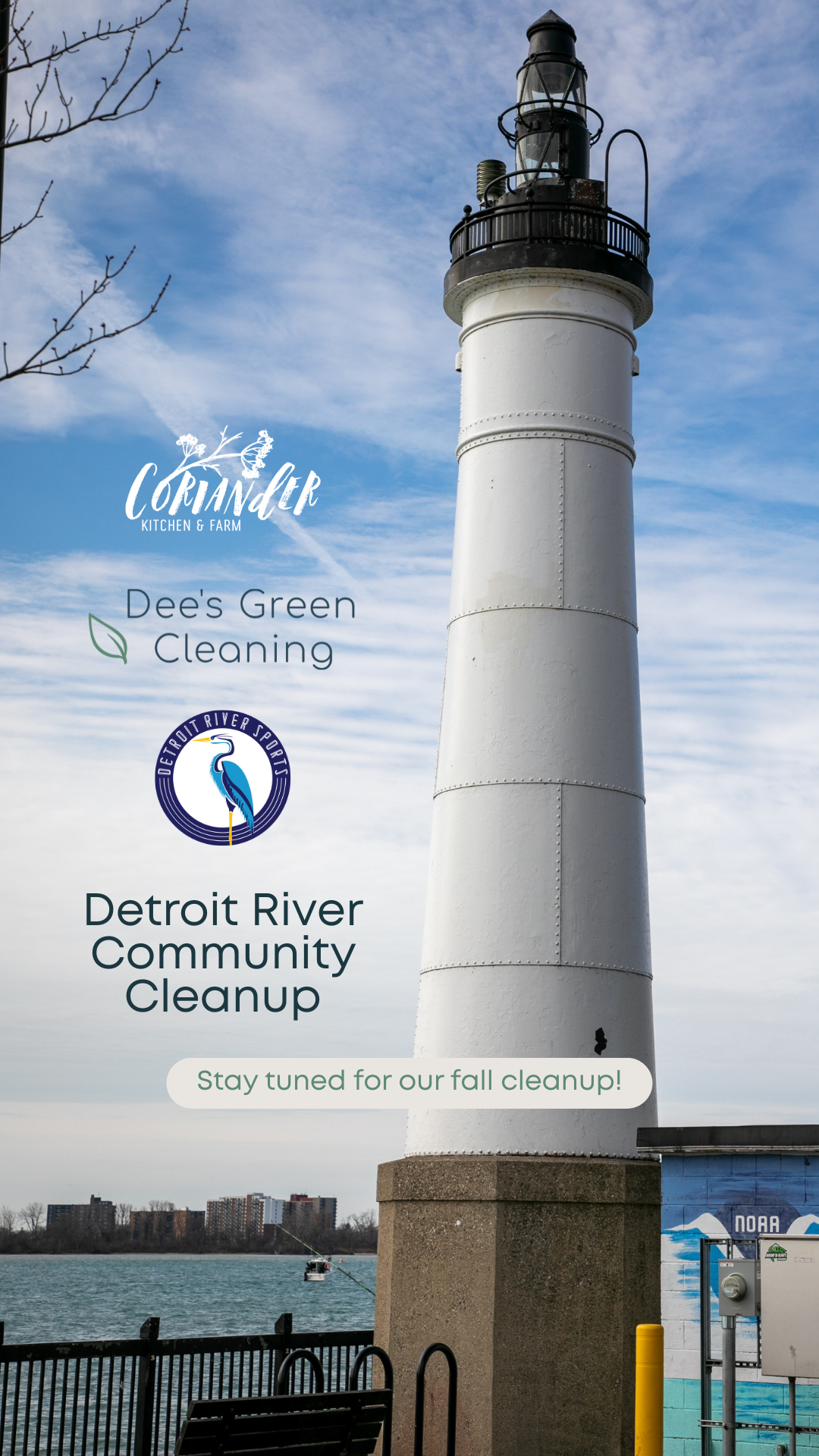
So much fun!
We recently had a cleanup at the Detroit Riverfront Parks in a collaboration with Detroit River Sports and Coriander Detroit Kitchen and Farm.
We had a total of 28 attendees, who collectively removed and properly disposed of 279.4 POUNDS of trash!
In addition, we are proud partners with a local organization called The Cleanup Club 🩷✨ who helped supply cleanup materials alongside the Detroit Park Coalition.
Thank you to everyone who helped make this possible!
Our next Detroit River Community Cleanup will be in the fall, so stay tuned!
Plus
Keep your eyes open for future cleanups & events!
Curious about what Dee’s Green Cleaning can do for you and your home?
Get a quote today & schedule through the link below 💚
If you’re interested in further reading, take a look at our resource list, below 📖
https://www.sciencedirect.com/science/article/pii/S2666765726000116
https://consumergoods.com/new-research-shows-consumers-more-interested-brands-values-ever
https://www.earthday.org/history/
https://www.bcpp.org/wp-content/uploads/2025/07/bcpp-ifra-fragrance-report-final-2025.pdf
https://pmc.ncbi.nlm.nih.gov/articles/PMC6165352/#sec7-medicines-05-00098
